Guides
A first-timer's guide to Blackwater National Wildlife Refuge
Thirty thousand acres of tidal wetland that you are already inside — when to go, what you'll see, and how to do the Wildlife Drive properly.
Blackwater National Wildlife Refuge is the reason a lot of people come to Dorchester County, and it is ten minutes from our driveway. It protects about a third of Maryland’s tidal wetlands — roughly 30,000 acres of marsh, open water and loblolly pine, threaded with creeks that go nowhere in particular.
It is also, quietly, one of the best places on the East Coast to see a bald eagle without trying.
Go early or go late
This matters more than anything else. The refuge is fully alive in the first and last ninety minutes of daylight and comparatively quiet at noon. Eagles hunt in the morning. Deer move at dusk. The light over the marsh at either end of the day is the reason photographers keep coming back.
Midday in July is hot, still, and thick with insects. Plan around it.
Drive the Wildlife Drive
The four-mile Wildlife Drive is the main event and the easiest way in — a one-way paved loop you can do from the car, with pull-offs the whole way. Bring binoculars. Drive it slowly enough that people behind you get annoyed, then let them pass.
What you’re looking for:
- Bald eagles, year-round, and in real numbers. The refuge has the largest breeding population on the East Coast north of Florida.
- Great blue herons and egrets, working the shallows almost constantly.
- Sika deer at the field edges near dawn and dusk — small, dark, and much stranger to see than whitetail.
- Delmarva fox squirrels, once endangered, now recovered, and genuinely large.
- Snow geese and tundra swans in winter, sometimes in the thousands.
Walk at least one trail
The driving loop is the headline, but the short walking trails are where the marsh gets close. The Marsh Edge Trail is a quarter mile out to an overlook. The Woods Trail runs through loblolly pine and is a different landscape entirely.
Neither takes long. Both are worth doing.
Season by season
Spring brings nesting eagles and the first ospreys back, with the marsh greening up and the insects not yet serious.
Summer is hot and buggy but the best paddling — and the refuge is far less crowded than anywhere on the ocean side of the peninsula.
Fall is arguably the peak: sika bugling, migration underway, and the marsh grasses turning gold and rust across the whole horizon.
Winter is the birder’s season. Snow geese, tundra swans, and a starkness to the landscape that photographs beautifully.
Practical things
The visitor center has maps, restrooms and a decent bookshop. There’s a small per-vehicle entrance fee for the Wildlife Drive. Cell service is patchy inside the refuge — download your map first.
And bring bug spray between May and September. Everyone thinks they won’t need it.
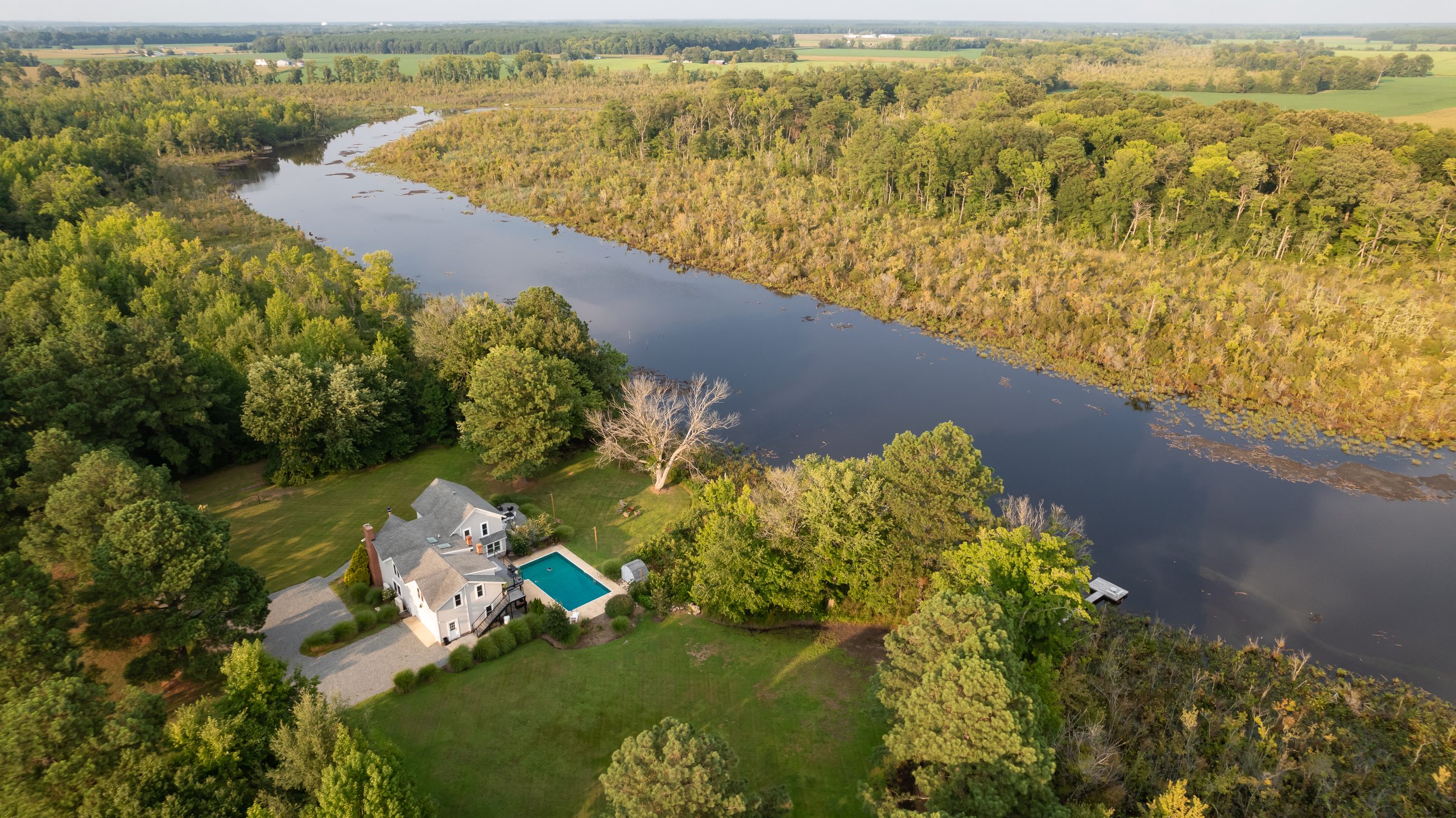
Blackwater Bend sits at the edge of all of this, on the Little Blackwater with the refuge just beyond the far bank. You can paddle a version of this landscape straight from our lawn.
Stay with us
Blackwater Bend sleeps 10, five minutes from Cambridge
A waterfront farmhouse on 70 acres with a private pool, a dock, kayaks and bikes. Booking direct avoids the platform service fee.
Check availability